
Almost everyone who searches how big should your forehead be believes theirs is too big. They have usually reached that verdict from one unflattering selfie, standing under bathroom lighting, zooming in. Here is the calmer truth: there is no single correct forehead size in centimetres. What the eye judges is proportion — and proportion can be checked properly in about two minutes.
The honest answer: it is about thirds, not size

Artists and doctors divide the face into three horizontal zones called the facial thirds: hairline to brow, brow to the bottom of the nose, and nose to chin. A forehead reads as "big" when the upper third is clearly longer than the other two. A forehead of exactly the same measurement can look modest on a long face and dominant on a short one — which is why any answer given in centimetres alone is meaningless.
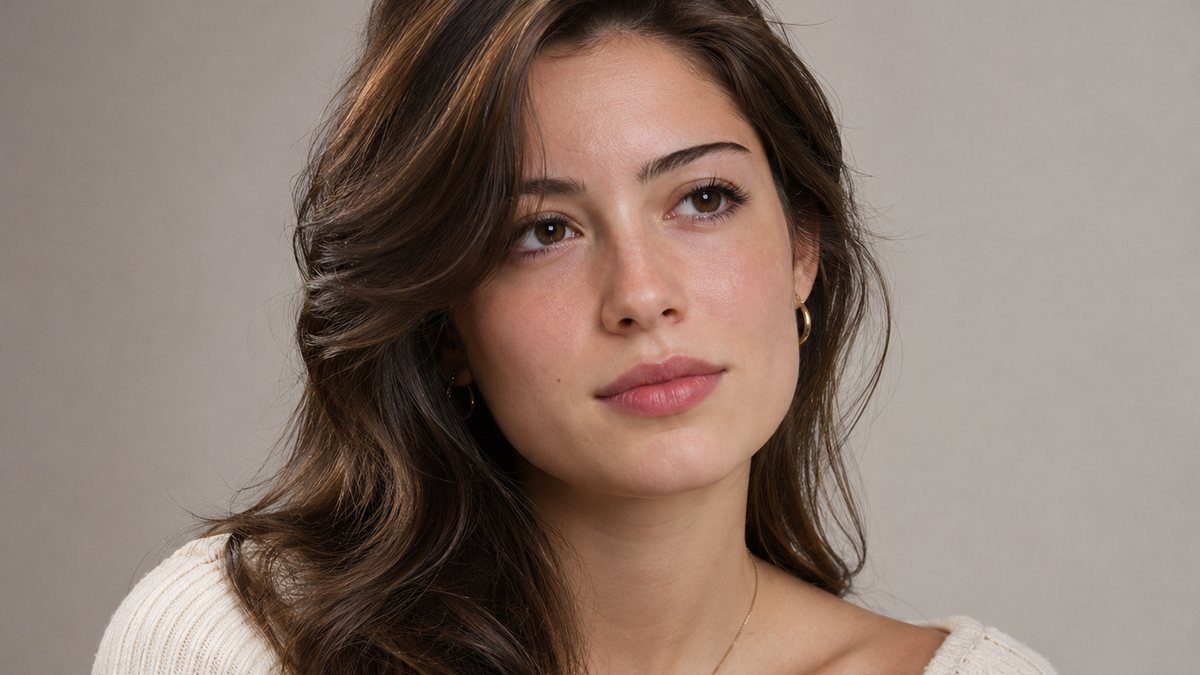
Our guide to facial thirds walks through measuring all three zones if you want the full picture. The short version: compare, do not measure in isolation.
How to check your forehead proportion
Method 1: the thirds check. Stand in front of a mirror with your hair pulled back. Find your hairline (where hair meets forehead skin, at the centre) and the top of your brow bone. Mentally — or with a finger as a rough ruler — compare that span against brow-to-nose and nose-to-chin. Roughly equal? Your forehead is proportional, whatever its raw size. Noticeably longer than both? Your upper third is long, which is a proportion description, not a defect.
Method 2: the four-finger test. You have probably seen this one: lay four fingers horizontally across your forehead. If they fit neatly between hairline and brows, the forehead is declared "normal"; if a gap remains, "big". Treat it as a party trick. Finger width varies hugely between people — a person with slim fingers will "fail" this test with a perfectly proportional forehead. It measures your fingers as much as your face.
Why foreheads look bigger than they are
- A high hairline is not the same as a long upper third. If your hairline sits high but your thirds are balanced, the forehead reads larger because more skin shows — a hairline story, not a bone story.
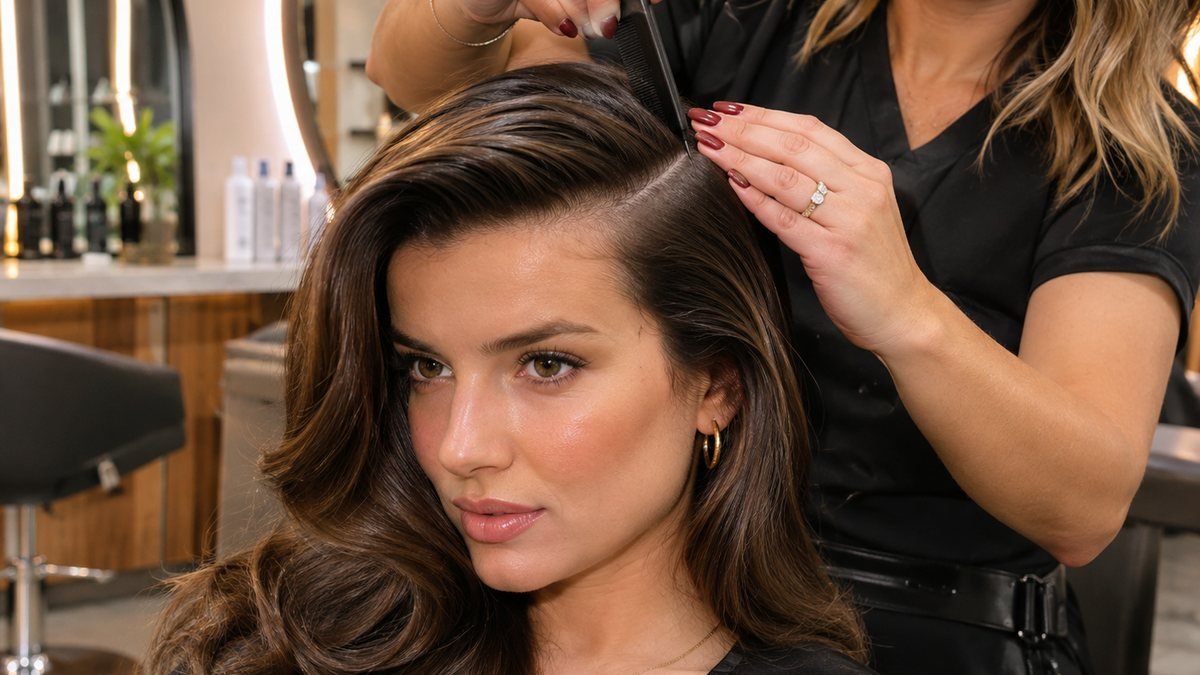
- Pulled-back hairstyles expose the entire surface with no frame breaking it up, which is why the same forehead looks bigger in a tight ponytail than with a fringe or side part.
- Camera angle from below stretches the upper face; a selfie taken at chest height is forehead propaganda.
- Close-range selfies distort the centre and top of the face generally (see our guide on why photos mislead) — never judge proportions from arm's-length pictures.
- Lighting from above flattens the brow shadow and leaves the forehead as one bright, unbroken sheet.
If you want your forehead to look smaller
Hairstyles do this job well. A fringe removes the forehead from view almost entirely; a side part lowers the visual hairline on one side and breaks the symmetry that draws attention; volume at the sides of the face rebalances a top-heavy read; avoiding severe pulled-back styles costs nothing and changes the most. Makeup can help at the edges — a matte bronzer or contour shade blended along the hairline reads as shadow and trims the apparent height.
Permanent routes (hairline procedures and the like) are medical decisions with medical trade-offs, and they belong in a consultation room, not in styling advice. This guide deliberately stops at hair and makeup.
Forehead Size FAQs
What is the average forehead size?
Published measurements exist for specific populations, but they vary a great deal by sex, ancestry and exactly where the measurement starts and ends — there is no universal human average that applies to you. The useful test is not how your forehead compares to a global number, but whether your upper third is in proportion with your other two.
Is a big forehead a sign of intelligence?
No. It is an old visual stereotype — cartoons draw clever characters with big foreheads, and the association stuck. Skull and forehead dimensions do not measure anyone's intelligence.
Does a high hairline mean a big forehead?
Not necessarily. A high hairline shows more forehead skin, which makes the area look larger, but your upper third may still be proportional to the rest of your face. Hairline position and forehead proportions are two different measurements.
Can your forehead get bigger with age?
The bone does not grow in adulthood. What can change is the hairline: if it recedes, more forehead is exposed and the upper third reads longer. Skin and muscle changes with age can also make the brow sit differently, subtly changing the proportions you see.
Which face shapes have bigger foreheads?
Heart shaped faces read as forehead-dominant — a wide forehead is part of the shape's definition, balanced by a narrow chin. Oblong and oval faces can carry a longer upper third too. In every case it is the balance between the zones, not the forehead alone, that defines the look.
The short version
Stop measuring centimetres and start comparing thirds. If your upper third is roughly equal to the other two, your forehead is the size it should be — regardless of what one selfie told you. And if it is longer, hair and styling hold most of the fix.