
If you look in the mirror and notice a gently curved jawline paired with a face length that is slightly longer than its width, you likely have an oval face shape. This facial structure has long been celebrated in fashion and image consulting circles for its natural visual balance. Because there are no sharp angles or extreme proportions pulling visual focus, an oval shaped face acts as a remarkably adaptable canvas for almost any haircut, pair of glasses, or makeup technique.
The main characteristic of this shape is an even distribution of features. The forehead is typically just a bit wider than the softly curved chin, while the cheekbones form the widest horizontal point of the face. This creates what stylists refer to as a balanced face shape, where no single feature overwhelms the outline.
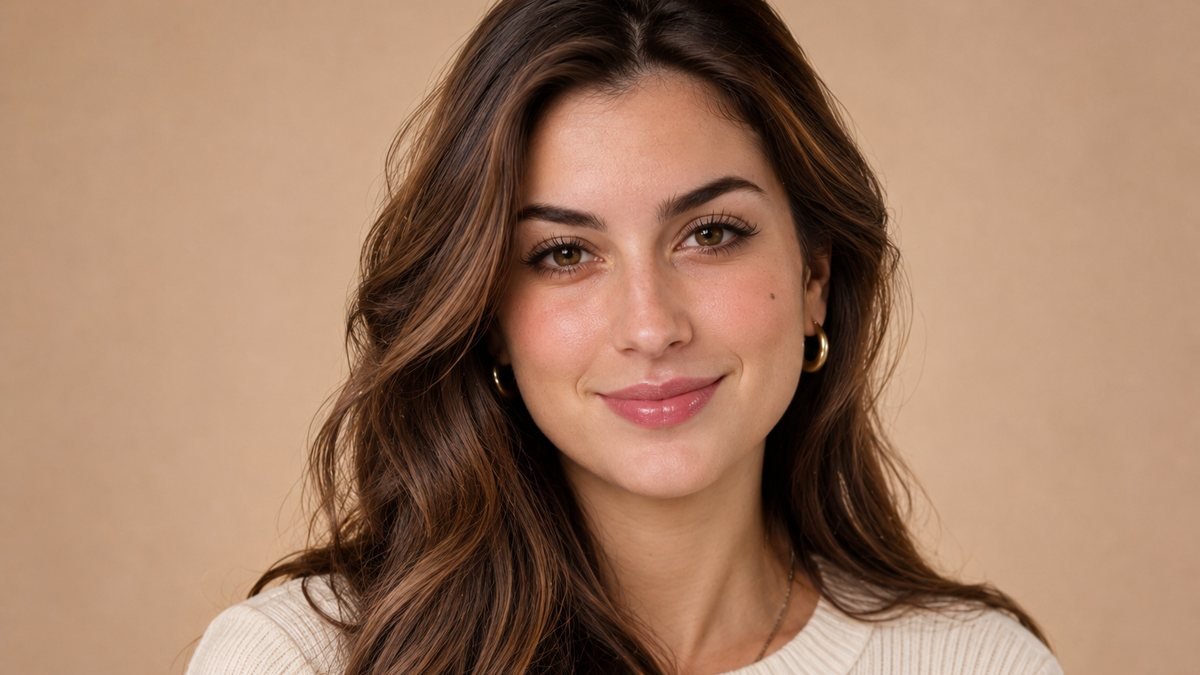
However, it is worth clearing up a persistent myth: calling the oval shape versatile does not mean it is the "best" or most attractive face shape. Concepts of beauty vary widely across cultures and personal tastes, and striking features like a strong square jawline or sharp heart-shaped cheekbones are just as desirable. The defining advantage of an oval outline is simply versatility—it requires very little effort to balance out heavy proportions because its visual structure is already evenly weighted.
How to Tell If You Have an Oval Face Shape
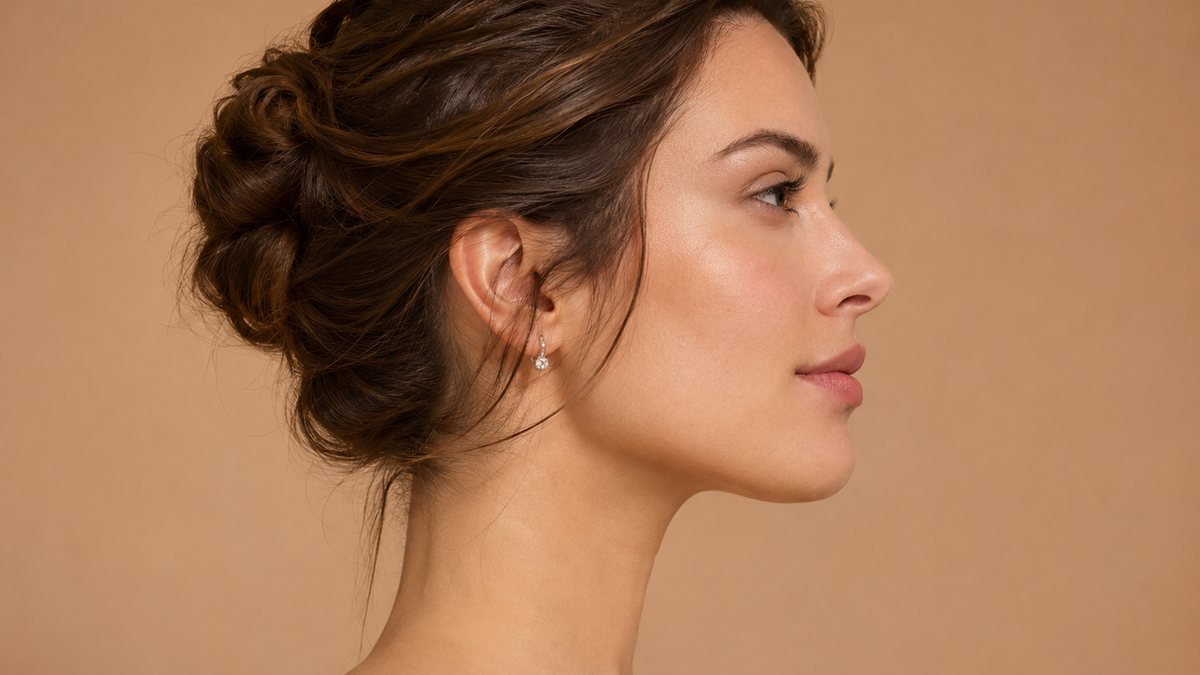
Determining your face shape does not require complex mathematical equations, but it does help to look for specific visual markers. An oval face is defined by soft, continuous lines rather than sharp corners.
Here are the primary visual signs that indicate an oval structure:
- Proportions feel moderately elongated: When looking at your face straight on, the vertical distance from your hairline to your chin feels noticeably longer than the horizontal distance across your cheekbones—typically feeling about one-third to one-half longer than it is wide.
- The cheekbones are the widest point: If you trace the outer perimeter of your face, the widest span occurs right at the cheekbones, tapering gently upward toward the temples and downward toward the jaw.
- A broad, soft forehead: Your forehead is slightly wider than your jawline, creating a clean, gentle slope down the sides of your face without sudden indentations or wide flares.
- A rounded jawline and chin: The jawline forms a smooth, continuous curve. Unlike a square face shape, there are no sharp angles at the corners of the jaw below the ears, and unlike a heart face shape, the chin ends in a soft curve rather than a sharp point.
- Absence of prominent width spikes: No single horizontal line—whether at the forehead, cheekbones, or jaw—looks disproportionately wide compared to the rest of the face.
If your facial outline flows smoothly from temple to chin without sharp turns or extreme width, your proportions fit the classic oval pattern.
Oval vs Oblong vs Round Face Shapes
Because oval faces share features with several other face shapes, it is easy to confuse them. The most common mix-ups occur between oval, oblong, and round shapes, as all three feature curved jawlines without sharp corners.
Understanding the topic of oval vs oblong face shape comes down to length and side contours, while differentiating oval from round depends on overall width.
| Feature | Oval Face Shape | Oblong Face Shape | Round Face Shape |
|---|---|---|---|
| Length to Width | Moderately longer than wide (approx. 1.5x) | Significantly longer than wide (approx. 1.7x+) | Nearly equal length and width (approx. 1x) |
| Cheekbones | Widest point, soft curve | Similar width to forehead and jaw | Widest point, full and rounded |
| Side Outlines | Gently tapered toward chin | Mostly straight vertical lines | Soft, fully rounded perimeter |
| Jawline | Softly rounded, moderate width | Softly rounded, but narrower appearance | Soft, circular, short chin |
| Overall Impression | Balanced egg shape | Elongated rectangular appearance | Circular visual field |
When analyzing an oval vs oblong face shape, think of an oblong face as an oval frame that has been stretched vertically. An oblong face has long, straight sides along the cheeks, and the forehead, cheekbones, and jaw are often almost identical in width. An oval face, by contrast, retains a clear taper: the cheekbones curve outward, and the face narrows noticeably at both the hairline and the chin.
A round face shape shares the curved, soft jawline of an oval face, but lacks its vertical length. On a round face, the distance from hairline to chin is roughly equal to the distance across the cheekbones, creating a wider, fuller appearance with shorter facial segments.
How to Measure Your Face Shape at Home
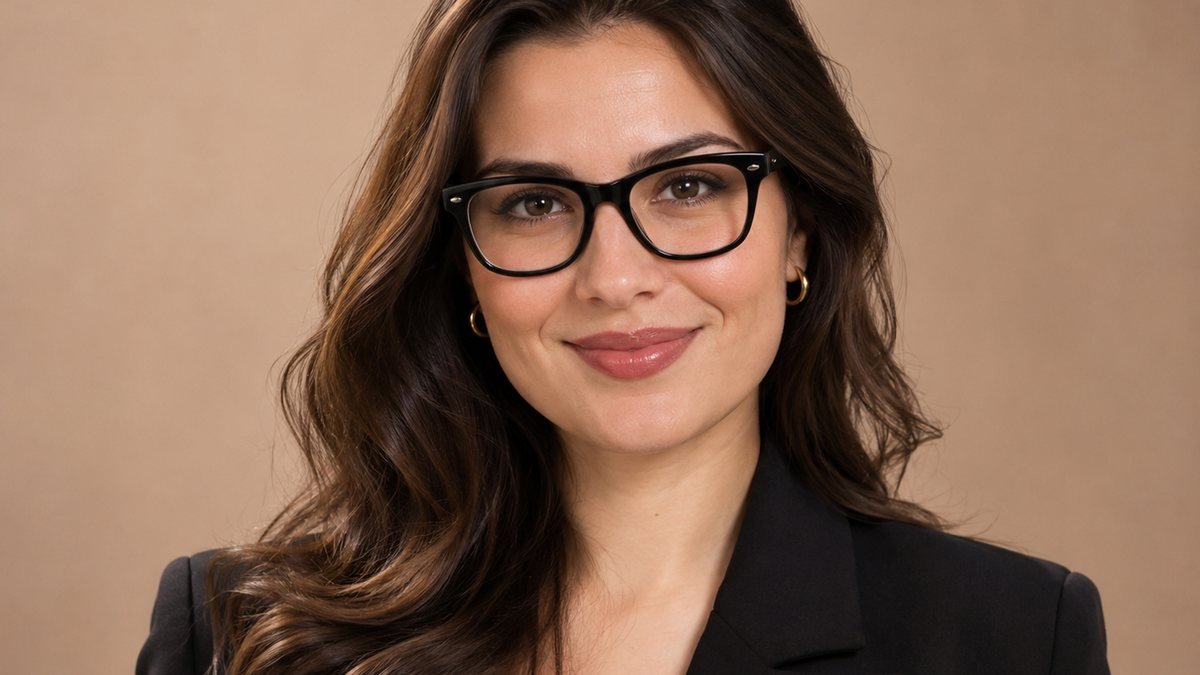
If relying on visual estimation alone leaves you uncertain, taking four basic structural measurements can help clarify your silhouette. You will need a flexible measuring tape or a piece of string and a ruler. Stand in front of a mirror with your hair pulled back flat against your head.
The 4 Key Measurements
- Forehead Width: Measure across the widest part of your forehead, halfway between your eyebrows and your hairline.
- Cheekbone Width: Place the end of the tape at the outer corner of one eye, trailing across the bridge of your nose to the outer corner of the other eye, resting over the prominent part of your cheekbones.
- Jawline Width: Measure from the base of your jaw just below your earlobe down to the center tip of your chin. Multiply this number by two to get your full jawline measurement.
- Face Length: Measure straight down the center line of your face, starting from the exact middle of your hairline down to the bottom tip of your chin.
Interpreting Your Results
Once you have recorded these numbers, look at the relationships between them rather than the exact figures:
- Length is the largest number: Your face length should be noticeably greater than your cheekbone width (usually about 30% to 50% larger).
- Cheekbones are second largest: Your cheekbone measurement should be larger than both your forehead and your jawline width.
- Forehead is larger than jawline: Your forehead measurement should be slightly wider than your total jawline measurement, showing a gradual downward taper.
- Jawline is rounded: Your jawline should taper smoothly down without forming a wide horizontal base.
If your measurements follow this descending hierarchy—Length > Cheekbones > Forehead > Jawline—you are confirmed to have an oval outline.
If you prefer to skip manual tape measurements, you can quickly double-check your facial proportions visually by uploading a clear front-facing image to our face shape detector, which evaluates frame outlines directly from photos.
Hairstyles That Suit an Oval Face Shape
Because of its natural symmetry, choosing oval face shape hairstyles is largely a matter of personal preference rather than visual correction. While other face shapes often use hair to soften sharp jawlines or widen narrow frames, an oval face can handle a broad variety of cuts, lengths, and textures.
Here are six haircuts that complement an oval structure, along with the visual reasons why they work so well:
1. Long Face-Framing Layers
Cascading layers that start near the cheekbones or chin emphasize the middle section of the face without pulling the overall outline down. Layering adds movement and texture, ensuring that long hair does not fall flat against the cheeks and artificially narrow the face.
2. Blunt Bob or Long Bob (Lob)
A sharp bob ending at the chin or collarbone draws direct focus to the gentle curve of an oval jawline. Because an oval face does not have a wide square jaw, a clean horizontal cut line adds structure without looking harsh.
3. Side-Swept or Curtain Bangs
Curtain bangs open up the center of the face while sweeping outward past the temples. This frames the eyes and cheekbones beautifully. Unlike heavy straight-across bangs, curtain bangs maintain the open, balanced vertical flow of the face.
4. Textured Pixie Cut
Crop cuts look exceptionally harmonious on oval shapes because there are no heavy lower-jaw angles to balance out. A textured pixie highlights natural cheekbone structure and neat jaw contours without getting lost in excess volume.
5. Soft Waves with Side Part
Adding gentle body and wave through the mid-lengths creates horizontal width across the cheekbones. A side part breaks up vertical line continuity slightly, bringing out eyes and cheek prominence.
6. High Ponytails and Slicked-Back Styles
Pulled-back hairstyles strip away framing, putting full focus on your raw facial outline. Since an oval silhouette is naturally symmetrical, slicked-back styles look neat and well-proportioned without requiring loose strands to hide the sides of the forehead or jaw.
Hairstyles to Approach with Caution
While an oval frame is flexible, certain extreme cuts can disrupt its balance:
- Heavy, thick, straight-across fringe: A dense bang cut straight across the forehead can chop off a third of your face length. On an oval face, this can make the lower half look disproportionately short or round.
- Excessive top volume with flat sides: Styles featuring sky-high pompadours, extreme tease, or tall top-knots without side volume add artificial length. This can push an oval silhouette into looking elongated or oblong.
- Flat, pin-straight long hair with no layers: Ultra-long hair that clings flatly to the sides of the head draws straight vertical lines down the face. This hides cheekbone curvature and can drag your proportions downward.
Glasses and Sunglasses for an Oval Face Shape
When selecting eyewear, individuals with an oval shaped face enjoy wide freedom of choice. Because your features are naturally proportioned, you do not need frames to correct for an overly wide forehead or an angular jawline.
Frame Styles That Excel
- Wayfarer and Walnut Frames: The horizontal structure of a classic wayfarer frame sits neatly across the widest part of an oval face, adding subtle definition without looking overly harsh.
- Square and Rectangular Frames: Eyewear with clean lines or geometric angles provides a pleasing visual contrast to the soft curves of an oval jaw and forehead.
- Aviators: The teardrop shape of classic aviator sunglasses mirrors the natural downward taper of an oval outline, resting comfortably on cheek contours.
- Cat-Eye Shapes: Frames that sweep upward at the outer corners highlight cheekbone width, lifting the face visually.
The Critical Sizing Rule for Oval Faces
The most important factor for an oval face is not the shape of the frame, but its scale.
- Maintain width balance: Choose frames that are as wide as, or slightly wider than, the broadest part of your face (your cheekbones).
- Avoid overly wide frames: If a frame extends far beyond your temples, it will make your face look unnaturally narrow and thin inside the glasses.
- Avoid tiny frames: Extremely narrow or small frames can disrupt natural proportions, making a balanced face look larger than it actually is.
Makeup Tips to Highlight Your Natural Contours
Because an oval frame already possesses even spacing, makeup application should focus on highlighting existing structure rather than re-shaping features.
Gentle Contouring
You do not need heavy contouring to slice away sharp jaw corners or slim down a broad forehead. If you use contouring products:
- Apply a light shade directly under the cheekbones to accentuate depth.
- Optionally sweep a tiny touch along the very top of the hairline if you feel your forehead has extra vertical space you want to soften.
Blush Placement
To bring attention to the center of your face:
- Apply blush to the apples of your cheeks.
- Blend upward and outward along the cheekbone toward your hairline. This pulls visual attention upward and highlights the natural width of your mid-face.
Eyebrow Shaping
Brows act as the top structural frame for your face.
- An eyebrow shape with a soft, natural arch complements an oval frame best.
- Avoid overly steep, harsh brow arches, which can add unnecessary vertical intensity.
- Avoid completely flat horizontal brows, which cut across the forehead and disrupt the gentle flow of your features.
Famous Faces with an Oval Face Shape
Facial shape classification is often subjective—lighting, camera angles, styling, and aging can alter how a face appears on camera. However, celebrity stylists and beauty analysts frequently point to several public figures as classic examples of an oval structure:
- Beyoncé: Often referenced as an example of an oval silhouette due to her smoothly curved jawline, wide cheekbone structure, and gentle vertical taper.
- Jessica Alba: Frequently cited for her classical symmetry, featuring a soft forehead, prominent cheekbones, and a balanced chin.
- Bella Hadid: Demonstrates how an oval shape can maintain clear bone definition and structured cheekbones while preserving a smooth, elongated outline.
Observing how these public figures alter their hair parts, lengths, and accessories can give you a practical look at how flexible an oval frame can be under different styling choices.
Oval Face Shape FAQs
Is oval the most attractive face shape?
No single face shape is inherently the most attractive. While mid-20th-century beauty manuals often rated oval faces highly due to visual symmetry, modern beauty standards celebrate a wide variety of shapes. Square jawlines, heart-shaped cheekbones, and round faces are all considered attractive in different cultural contexts. The primary advantage of an oval shape is versatility with hair and glasses, not superior attractiveness.
Oval or oblong — how do I tell the difference?
The easiest way to differentiate them is by assessing length relative to width and the straightness of the cheek lines. An oval face has curved, tapering side contours and a length roughly 1.5 times its width. An oblong face is noticeably longer (often 1.7 times its width or more) with straight vertical side contours where forehead, cheekbones, and jawline are almost identical in width.
Can an oval face look oblong with the wrong hairstyle?
Yes. If an oval face is styled with extreme vertical height on top (such as a tall pompadour or high teased updo) paired with sleek, flat sides and no framing layers, it elongates the facial perception visually. This makes an oval shape appear much closer to an oblong outline.
What hairstyles should an oval face avoid?
While an oval shape can handle most cuts, it is usually best to avoid heavy, flat, straight-across bangs that cover the entire forehead, as well as unlayered, pin-straight long hair that hangs flat against the sides of the face. These styles obscure your natural balance by either artificially shortening or excessively dragging down your face length.
Is oval the most common face shape?
There is no reliable global dataset ranking face shape frequencies. Face shape distribution varies significantly based on ethnicity, geographic ancestry, and individual genetic inheritance. While the oval shape is discussed frequently in styling literature because of its adaptability, it is not definitively proven to be the most common shape worldwide. ---
Finding Your Proportion Balance
Having an oval face shape gives you an ideal baseline for style experimentation. Because your features do not require specific hair volume or frame angles to achieve harmony, you have the freedom to pick haircuts, makeup, and eyewear based on your personal taste rather than corrective rules.
Whether you choose a short pixie, cascading layers, sharp geometric glasses, or soft round frames, your natural balance ensures that your features stay harmonious. If you want to confirm your facial outline visually, try analyzing your proportions with our free face shape detector to get a clear picture of your frame before your next salon visit or frame purchase.