
If you have ever typed why do I look ugly in photos into a search bar at midnight, here is the short, kind version: the mirror and the camera are not showing you the same face. One of them is flipped, moving and lit by your bathroom. The other is frozen, flat and shot through a lens that bends proportions. The version you dislike is mostly unfamiliarity and physics — not a truer, harsher verdict on your face.
Reason 1: you know the mirror version, not the photo version
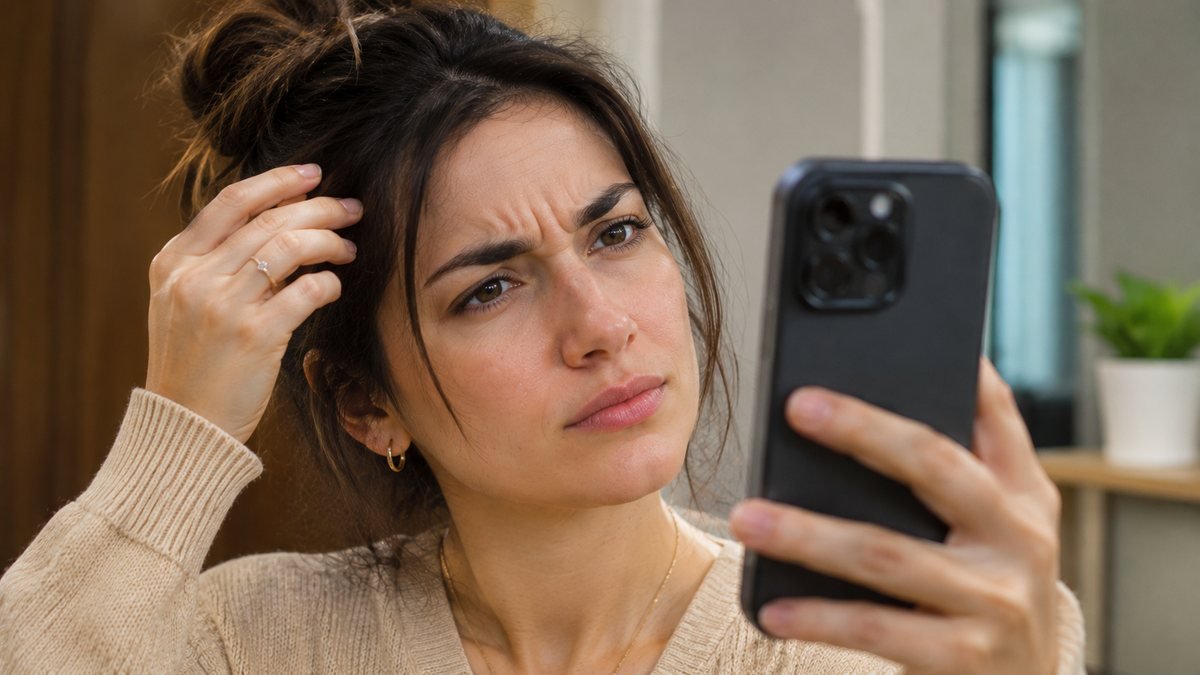
You have spent your whole life looking at a flipped image of yourself. Psychologists call the effect mere exposure: people tend to prefer the version of a face they have seen most often. Your most-seen version is the mirrored one — so the unflipped face in photos, with every small asymmetry on the opposite side from where you expect it, registers as "wrong" and slightly uncanny.

Here is the part worth remembering: your friends have the opposite history. They have only ever seen the unflipped you, so to them your photos look normal and your mirrored face would look strange. The face you wince at is the one everyone else recognises as you — and they are not wincing.
Reason 2: your phone camera reshapes your face
Phone front cameras are wide-angle lenses, and photos are usually taken at arm's length — very close. At that distance, a wide lens stretches whatever is nearest: the nose and the centre of the face swell, the ears and jaw edges shrink back, and proportions drift away from reality. It is the same effect behind the classic "big nose selfie", and it has nothing to do with your actual face.
The fix is boring and total: more distance. A photo taken from further away, zoomed in slightly, records proportions much closer to how faces look in person. Your worst selfies are simply your closest ones.
Reason 3: the mirror moves, the photo freezes
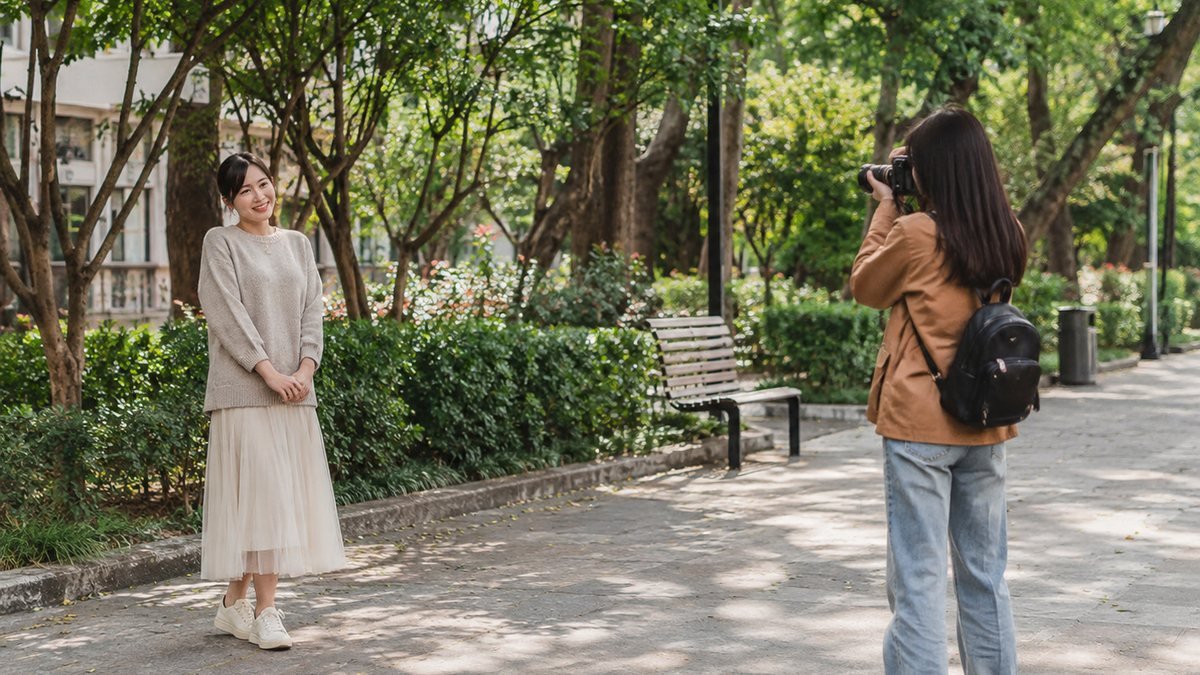
In the mirror you are performing, unconsciously and constantly — tilting to your better angle, lifting the chin, softening the expression, all in real time. You almost never see your resting, mid-motion face in a mirror.
A photo catches exactly that: a blink half-finished, a word half-spoken, the expression you were passing through on the way to another one. Judging your appearance from a frame you would never hold in real life is like judging a song from one frozen note. Add the flattening of 3D into 2D — which removes the depth cues your face's structure relies on — and harsher, less even lighting than your bathroom mirror provides, and the gap is fully explained without your face being at fault.
Reason 4: you inspect photos, you glance at mirrors
Nobody else studies your photos the way you do. You zoom into pores, compare your two eye sizes, find the one tooth at an angle. Everyone else sees your whole face, at a normal distance, for a normal amount of time — the same forgiving glance you give their photos, in which they, too, are convinced they look terrible.
A useful test: think of the last group photo you were in. You can describe exactly what is wrong with you in it. Can you describe what is "wrong" with anyone else? Almost certainly not — not because they photographed better, but because you never inspected them.
Which one is the real you?
Neither is complete on its own. The mirror is flipped and flattering with familiarity. The photo is unflipped but flattened, frozen and often lens-bent. What other people actually experience is closest to the photo version — unflipped, seen from normal distances — but in motion, in real light, and with the warmth of expression that no still frame carries. That moving version is consistently rated kinder than the frozen one, by the simple fact that it is the whole signal instead of a slice of it.
"Unphotogenic" almost always means unpractised — someone who has not yet learned their distance, light and relaxed expression — not someone with the wrong face.
What actually helps
- Distance first. Step back or extend the arm fully; zoom slightly instead of leaning in.
- Light in front of you. Face a window or a soft light source; overhead and backlight are the two great photo saboteurs.
- Take several frames. Professionals never judge one shot. Give yourself the same odds and pick from five.
- Relax the expression. A small genuine smile mid-moment beats a held, strained one.
- Run the experiment. Try our attractiveness test twice — once with a rushed close selfie and once with a proper photo taken with the tips above. The score moving with photo quality is the honest lesson: the tool is reading the photograph, and photographs are variable. You are the constant.
FAQs
Why do I look good in the mirror but bad in pictures?
Three effects stack: you prefer the flipped face you know (mere exposure), the camera adds lens distortion and freezing that the mirror never does, and you inspect photos far more critically than mirror glances. Your mirror face is not fake and your photo face is not the truth — the gap is mechanical.
Is the mirror or the camera more accurate?
For proportions, a well-taken photo at a proper distance is closer to how others see you — but "well-taken" is doing heavy lifting. A close-up selfie is less accurate than your mirror. Other people's real experience of you sits beyond either: unflipped, moving, and in three dimensions.
Why do I look different in every photo?
Because a photo is not one variable — it is lens, distance, angle, light, expression and timing combined, and small changes in any of them redraw the face noticeably. Variation between photos is the normal behaviour of cameras, not evidence that one of them finally caught the "real" you.
Do other people see me like my photos?
They see the unflipped arrangement, yes — but in motion, at conversational distance, with expression and voice attached, and with none of your zoomed-in inspection. The version in their heads is considerably kinder than the frame in your camera roll.
Can someone be genuinely unphotogenic?
In the sense of "photos reliably flatten them", some faces do lose more than others in 2D — strong depth and structure can flatten harshly. But it is a property of how the camera treats them, not of how they look in person, and distance, light and practice close most of the gap for almost everyone.
The short version
You do not look worse in photos. You look different — flipped back, frozen and lens-bent — and you meet that stranger with the harshest inspection you give anyone. The people who know your face are perfectly happy with it. Learn the distance-and-light basics, take five frames instead of one, and let the camera roll go back to being a record instead of a trial.